PhD students from across the EMBL Australia community recently took part in an intensive mRNA Design and Optimisation training program delivered by the Monash mRNA Workforce Training Centre.
Held at Monash University’s Clayton campus from 6-8 July, the short course provided applied training in the design and optimisation of mRNA medicines, equipping participants with skills increasingly sought after across research and industry.
The initiative brought together 19 PhD students from EMBL Australia’s national network of early-career researchers to build their expertise in mRNA medicine through Australia’s first dedicated mRNA workforce training centre, established through a partnership between Monash University and the Victorian government via mRNA Victoria.
Through a combination of lectures and workshops, students explored the principles and strategies of mRNA medicine design and next-generation RNA technologies while engaging with experts from across the mRNA sector.
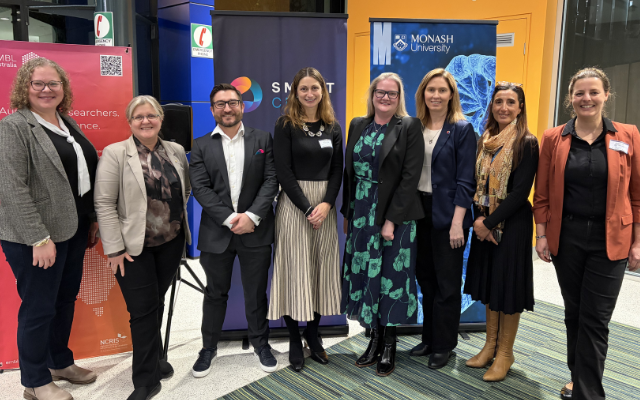
Beyond the scientific training, the program provided valuable opportunities to build professional networks.
EMBL Australia and the SMART CRC co-hosted a careers discussion and networking reception that connected students with industry leaders and showcased career pathways beyond academia.
The event featured a fireside chat with ARMI Deputy Director of Strategy and Planning Dr Maggie Evans-Galea AM, expertly facilitated by Dr Rachael Pitt, Head of Workforce Development at the SMART CRC, followed by discussions with industry representatives from Moderna, BioNTech and Cell Therapies.
Dr Evans-Galea said undertaking a PhD enables the development of valuable skills in leadership, project management and problem-solving, and opens up a veritable “choose your own adventure” of career pathways. Success, she noted, requires resilience, persistence and relationship management.
“You have to be able to ask people to do things without ticking them off and you have to be able to get people to come with you,” Dr Evans-Galea said.
“You have to be prepared to listen to people as well. If you’re consultative and take on ideas, people will generally come to you and you’ll come up with answers together.”
Varnika Khattar, a third-year PhD student from the Australian National University, said the three-day short course provided valuable insights into both the fundamentals and emerging applications of mRNA medicines.
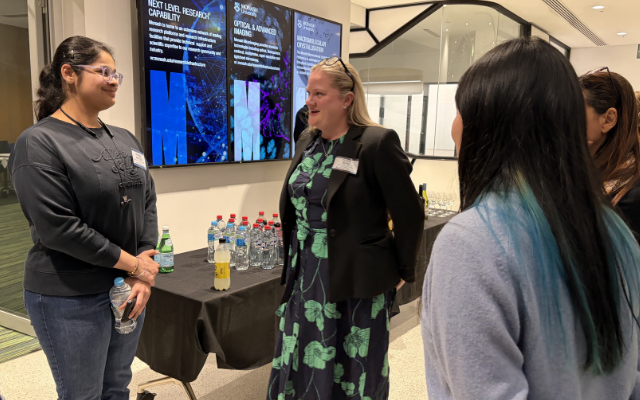
“I was very interested in learning how computational tools can be used alongside mRNA design principles to develop new therapeutics,” Ms Khattar said.
Ms Khattar also valued the opportunity to connect with experts and a diverse cohort of students working across different areas of mRNA research.
“It’s changed my perspective on various topics,” she said.
“Hearing other people’s perspectives about their work helped me come up with new ideas for how to solve problems in my own research.
“I’m taking away a lot of new ideas from the course, so it’s definitely inspired future directions for my project – and for my career, as well.”