What if immune cells could help repair the injured nervous system?
Neuroimmunologist Dr Faith Brennan is investigating that possibility through her research into spinal cord injury and recovery. Relocating from Queen’s University in Canada, she will join the Australian Regenerative Medicine Institute (ARMI) at Monash University as a new EMBL Australia Group Leader in December.
Dr Brennan’s research investigates how interactions between the nervous and immune systems influence outcomes following spinal cord injury. By combining genetics, molecular and cellular biology, advanced imaging and single-cell genomics, her laboratory seeks to understand how different cell types coordinate tissue repair, regeneration and functional recovery after injury.
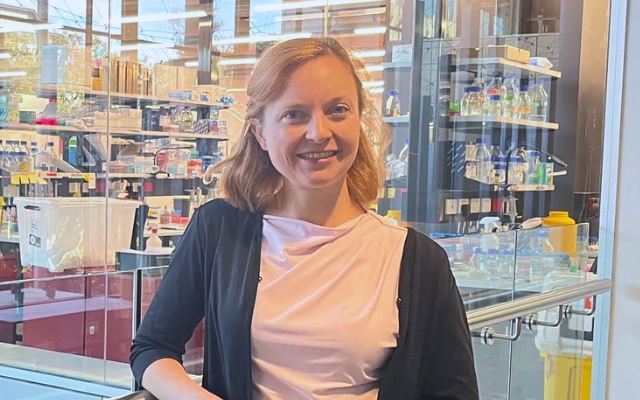
Originally from Australia, Dr Brennan completed her PhD at The University of Queensland before undertaking postdoctoral research at The Ohio State University. She later established the Neurotrauma Research Group at Queen’s University, where she has led an independent research program since 2022.
Recent work from Dr Brennan’s team has shown that tissue-resident macrophages, a type of immune cell found within the spinal cord, play critical roles in neuroprotection and regeneration following injury, providing new insights into how the immune system contributes to recovery and opening new avenues for therapeutic intervention.
“Over the next few years, I’m excited to explore how the immune and nervous systems communicate after injury to the central nervous system, and how these interactions influence neuroprotection and regeneration,” Dr Brennan said.
“By understanding this crosstalk, I hope to uncover why regeneration is so limited in mammals and reveal the mechanisms that control repair and plasticity after injury.”
Dr Brennan said neuroinflammation can have both beneficial and harmful effects on recovery, making immune cells such as macrophages an important focus of her research.
She is looking forward to joining Australia’s leading institute for regenerative medicine and becoming part of the wider European Molecular Biology Laboratory (EMBL) network and its collaborative culture.
“Having access to researchers with different expertise and perspectives will be incredibly valuable for tackling complex questions in neuroprotection and regeneration, and for shaping the next stage of my research,” she said.
EMBL Australia Scientific Head Professor Jose Polo said he was delighted to welcome Dr Brennan to the EMBL Australia community.
He said her appointment would create new opportunities for collaboration across the EMBL Australia Partner Laboratory Network while further strengthening Australia’s capabilities in neuroimmunology and regenerative medicine.