EMBL’s ARISE program is a dedicated fellowship framework for research infrastructure specialists, co-funded by the European Union’s Horizon 2020 research and innovation programme under the Marie Skłodowska-Curie grant agreement No 945405.
Now in its second iteration, ARISE has demonstrated how targeted investment in people delivers tangible outcomes, such as advancing technologies, strengthening facilities and shaping diverse career trajectories.
The program provides a powerful blueprint for workforce development initiatives.
 “EMBL ARISE fellowships are strongly linked to development or validation of new methods and technologies. Developing or implementing new methods is a hallmark of successful facilities and brings a strong scientific component to the position. It is expected that, at the end of the Fellowship, the innovation will lead to new or improved service offerings at the host facility – and at times even benefit other facilities. The Fellow also develops transferable research infrastructure competencies, for example about user engagement, service management, economics, and sustainability”.
–José Márquez, Head of Crystallisation Facility at EMBL Grenoble
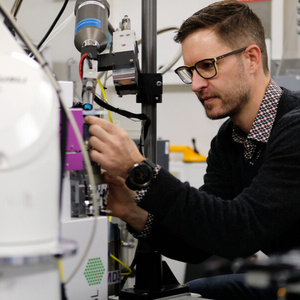
Making in situ serial crystallography more accessible
EMBL Grenoble Fellow Nicolas Foos explains the benefits of a new method developed by EMBL and the ESRF – a project he led during his ARISE fellowship.
Scientists at EMBL Grenoble and the European Synchrotron Radiation Facility (ESRF) have developed a new method for using in situ serial crystallography (iSX) to study the structure of macromolecules. They recently described this new technique in a paper published in the journal IUCrJ. The method is now operational at the ID23-2 beamline, jointly operated by EMBL and the ESRF.
Nicolas Foos, the first author of this publication, was part of the first generation of ARISE fellows – a programme designed to support the development of new technologies and methods in life sciences and train scientists in research infrastructure management.
Read the full article on embl.org

Cute molecules and the scientists who adore them: Yehudi Bloch
Yehudi Bloch, ARISE Fellow at EMBL Hamburg, talks about the snow flea antifreeze protein
Yehudi Bloch from EMBL Hamburg is especially amused by the snow flea antifreeze protein (PDB 2PNE), which allows snow fleas to survive in sub-zero temperatures. The protein is quite flat, like a snowboard.
Read ‘The Cute Side of Science’ story on embl.org
 We are EMBL: Melanie Schneider on changing career trajectory
ARISE fellow Melanie Schneider shares how she uncovered a new interest in research infrastructures and supporting discovery
Working in a research infrastructure requires a different set of skills from other careers in academia. This includes the provision of scientific services and user support, managing budgets, and leading large and diverse teams. EMBL’s ARISE programme trains fellows for a wide range of careers in research infrastructure, from developing novel methods to operational and strategic management.
After completing a two-year project on drug target tractability at EMBL-EBI and Open Targets, Melanie Schneider took a leap of faith to explore a longstanding interest in research infrastructure with the help of an ARISE fellowship.
Read the full interview with Melanie on embl.org