EMBL’s ARISE program is a dedicated fellowship framework for research infrastructure specialists, co-funded by the European Union’s Horizon 2020 research and innovation programme under the Marie Skłodowska-Curie grant agreement No 945405.
Now in its second iteration, ARISE has demonstrated how targeted investment in people delivers tangible outcomes, such as advancing technologies, strengthening facilities and shaping diverse career trajectories.
The program provides a powerful blueprint for workforce development initiatives.
 “EMBL ARISE fellowships are strongly linked to development or validation of new methods and technologies. Developing or implementing new methods is a hallmark of successful facilities and brings a strong scientific component to the position. It is expected that, at the end of the Fellowship, the innovation will lead to new or improved service offerings at the host facility – and at times even benefit other facilities. The Fellow also develops transferable research infrastructure competencies, for example about user engagement, service management, economics, and sustainability”.
– José Márquez, Head of Crystallisation Facility at EMBL Grenoble
The examples below demonstrate how the ARISE programme came to be and how its fellows have advanced technologies, strengthened research infrastructure capability, expanded professional networks and built rewarding careers across Europe and beyond.
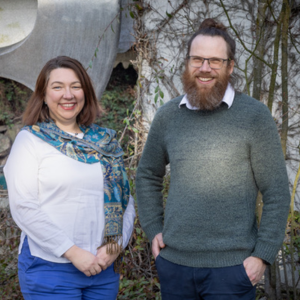
A story of success: From launch to future vision for the ARISE programmes
Learn how EMBL’s pioneering ARISE fellowship program has trained research infrastructure specialists, supported technology development and helped professionalise research infrastructure careers across Europe.
Programme consultant Tanja Ninković said ARISE was born from a need to attract and fund technology developers who would create new instruments, methods, software and data tools to enable innovative research and enhance services.
“Successful research infrastructures require professionals who possess a blend of scientific knowledge, technological expertise, and business management skills,” she said. “We hope to see more organisations developing training programs for research infrastructure scientists, professionalizing this career path alongside us and attracting the best talent to roles in core facilities, data service teams, synchrotrons and other service-providing infrastructures.”
The program now serves as a blueprint for Australia’s upcoming AusRISE initiative.
Read the full article on embl.org
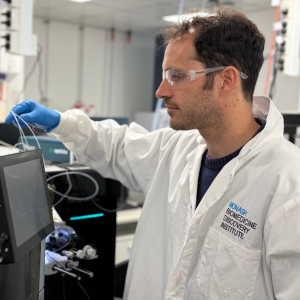
Australia welcomes its first EMBL ARISE Fellow
EMBL ARISE Fellow Dr Richard Jacoby’s recent placement at Monash University and visits to research infrastructure facilities across Australia demonstrate how international exchange builds expertise, fosters collaboration and strengthens research infrastructure networks.
Dr Richard Jacoby spent time at the Monash Proteomics & Metabolomics Platform, which provided opportunities to develop technical expertise, learn about research infrastructure operations, build new professional networks and explore future international collaborations.
Richard’s placement highlights the type of international exchange opportunities AusRISE aims to foster for Australia’s research infrastructure workforce.
Read more about his placement at emblaustralia.org
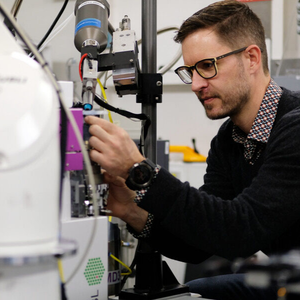
Making in situ serial crystallography more accessible
EMBL Grenoble Fellow Nicolas Foos explains the benefits of a new method developed by EMBL and the ESRF – a project he led during his ARISE fellowship.
Scientists at EMBL Grenoble and the European Synchrotron Radiation Facility (ESRF) have developed a new method for using in situ serial crystallography (iSX) to study the structure of macromolecules. They recently described this new technique in a paper published in the journal IUCrJ. The method is now operational at the ID23-2 beamline, jointly operated by EMBL and the ESRF.
Nicolas Foos, the first author of this publication, was part of the first generation of ARISE fellows – a programme designed to support the development of new technologies and methods in life sciences and train scientists in research infrastructure management.
Read the full article on embl.org
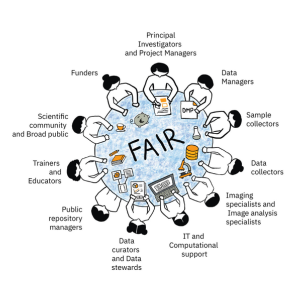 Making imaging data FAIR
ARISE Fellow Alexandra Zakieva is helping researchers make imaging data more Findable, Accessible, Interoperable and Reusable (FAIR) through new tools, training resources and data stewardship practices.
As part of her ARISE fellowship at EMBL Heidelberg, Alexandra Zakieva is developing FAIR image data management and stewardship services to support large international research consortia. Her work includes creating open educational resources, implementing best-practice workflows and developing innovative training formats to help researchers manage, share and publish imaging data more effectively.
Read the full story on embl.org