EMBL Australia Group Leader Dr Senthil Arumugam and alumni Group Leader Professor Mikaël Martino have secured highly competitive Australian Research Council (ARC) Future Fellowships in the 2026 funding round.
The Future Fellowships scheme supports outstanding mid-career researchers to undertake ambitious, high-impact research that addresses major national challenges and opportunities. Together, Dr Arumugam and Professor Martino have secured more than $2.4 million to advance research spanning bioimaging, cellular delivery, tissue repair and regenerative medicine.
Advancing the frontiers of cellular delivery through advanced bioimaging
Hosted at the Monash Biomedicine Discovery Institute (BDI), EMBL Australia Group Leader Dr Senthil Arumugam has been awarded $1,166,766 to investigate one of biology’s most important and least understood processes: endosomal escape.
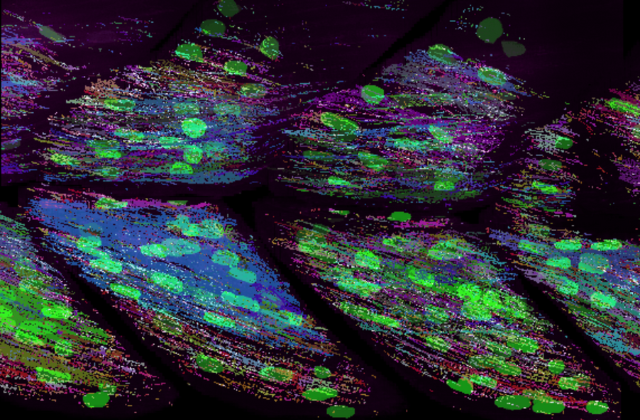
Endosomal escape is the process by which lipid nanoparticles and viruses cross cellular membrane barriers, enabling the delivery of biological cargo into cells. A deeper understanding of this process is critical to the development of next-generation therapeutics, including mRNA medicines and gene therapies.
Dr Arumugam’s project will harness advanced microscopy technologies to uncover the molecular mechanisms underpinning endosomal escape. The research is expected to generate new tools and technologies with broad applications across disciplines ranging from human health to agriculture and food production, while strengthening Australia’s capabilities in cutting-edge biological imaging.
The fellowship builds on Dr Arumugam’s leadership in advanced bioimaging. Earlier this year, he joined colleagues Dr Toby Bell and Dr Kate McArthur in launching the Monash BDI Advanced Bioimaging (MAB) Platform – a researcher-led global collaboration hub designed to connect researchers with innovative microscopy technologies. Integrating advanced instrumentation, image analysis and biological expertise, MAB aims to overcome technical barriers that often limit the power of modern bioimaging.
Investigating how nerves drive tissue repair and regeneration
Professor Mikaël Martino, based at the Australian Regenerative Medicine Institute (ARMI) at Monash University, has been awarded $1,329,808 to investigate a newly discovered biological mechanism that could transform understanding of tissue healing and regeneration.
His project will explore how sensory nerves influence the body’s ability to repair damaged tissues. Recent discoveries from the Martino laboratory revealed that sensory nerves actively grow into injured tissues and communicate with immune cells to promote healing and regeneration, uncovering an entirely new aspect of the repair process.
Through his Future Fellowship, Professor Martino will investigate how nerves enter damaged tissues, identify the molecular signals that coordinate recovery, and determine whether similar mechanisms operate in the injured heart. The findings are expected to deepen understanding of how the nervous and immune systems work together to drive regeneration and strengthen Australia’s leadership in this emerging research field.
An EMBL Australia alumni Group Leader, Professor Martino is internationally recognised for translating fundamental discoveries into real-world applications. In recent years, he has co-founded biotechnology companies Myostellar and Orio Therapeutics, helping advance innovative regenerative medicine technologies from the laboratory towards clinical and commercial translation.
Supporting Australia’s future research leaders
The ARC’s 2026 Future Fellowships round represents the largest investment in the scheme’s history, providing more than $344 million to support over 290 research projects across Australia. The program enables outstanding researchers to establish and expand independent research programs while contributing to Australia’s long-term research capability, innovation and prosperity.
Congratulations to Dr Arumugam, Professor Martino and fellow recipients!